
R&D to Commercial: The Step Change in Compliance Expectations
Many biotech organisations assume the transition from R&D to Commercial is a gradual evolution. In reality, the commercial readiness journey is not linear. It’s a step change. The level of scrutiny an organisation is exposed to often changes suddenly in response to:
- Preparation for first launch
- Partner or licensee due diligence
- Investor challenge ahead of funding
- Increased interaction with regulators
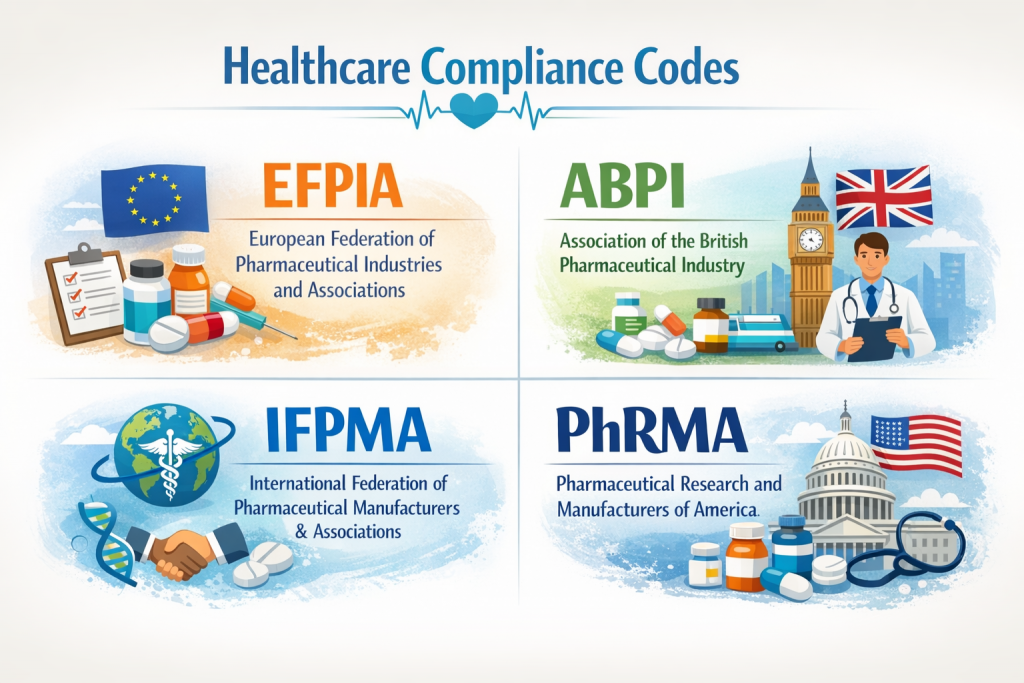
For biotechs, the risk is not getting compliance wrong. It is assuming that compliance will evolve gradually when, in reality, the rules change quickly, and often before organisations think of themselves as “commercial”. This article focuses on compliance with healthcare codes such as EFPIA, ABPI, IFPMA, PhRMA during the R&D to commercial transition.
The Code Trigger Point
Healthcare compliance codes outline expectations both pre- and post-commercialisation. The trigger point is not company size or maturity. It is the start of promotional, pre-launch, or market-facing activity. This could be well in advance of product launch.
Technically, these codes are not mandatory as they are not statutes passed by a parliament or congress. They are codes implemented by membership organisations who normally require organisations to commit to adopting their code as a condition of membership. However, some elements have been written into national law, for example transparency reporting in France, Portugal, and Denmark. In the US, the OIG treats the PhRMA code as the baseline standard for a credible compliance programme and some states, for example, California and Massachusetts, have incorporated some PhRMA code requirements into law or regulation. In the UK, companies that sit outside ABPI self‑regulation are not “unregulated”. Where self‑regulatory jurisdiction does not apply, the MHRA enforces the Human Medicines Regulations directly, removing the procedural protections of the Code and exposing companies to potentially more severe statutory sanctions.
For a biotech organisation transitioning to commercial, treating these codes as “voluntary” is therefore a high-risk strategy.
Five Healthcare Compliance Risk Themes
Here are five code-related risk areas that face biotech organisations transitioning from R&D to commercial. This list is obviously not exhaustive, but does highlight the key themes that organisations need to be aware of:
- Scientific exchange vs promotion – In R&D environments, interactions with investigators and experts are governed mainly by research principles. Once commercialisation approaches, previously acceptable scientific exchanges may no longer be appropriate. Scientific exchanges are assessed using facts and circumstances (intent, audience, context and content) and may remain non-promotional, but the burden of proof increases as commercialisation approaches.
- From Informal to Formal – During R&D, governance is often pragmatic, informal, and heavily relationship driven. This requirement changes during commercialisation. The four Codes all require documented procedures, approval systems, and training as evidence that compliance is embedded. They also emphasise leadership accountability and there is a greater focus on culture and behaviours. Note: building “perfect” compliance systems that are aspirational and not followed in practice or ones that are so bureaucratic they act as roadblocks are common mistakes made by organisations at this stage of development – this introduces different but linked risks.
- HCP Interactions – The transition to commercialisation introduces greater volume and repeated interactions with HCPs, multiplying the exposure. Risk areas include meals, speaker programmes, advisory boards, and congresses. Each of the codes has different thresholds and reporting requirements and market-specific engagement standards are required so there is a level of complexity that needs to be managed.
- Patient Organisations – EFPIA and IFPMA prioritise working with patients (patient-centric engagement) throughout the product lifecycle. However, they impose specific requirements in order to prevent inducement, and these become more important as R&D organisations transition to commercial. These include written agreements, factors ensuring the independence of patient organisations, and clear public disclosure.
- Transparency Obligations – Transparency requirements are not triggered by product approval or launch. For example, under EFPIA‑aligned frameworks, disclosure of transfers of value to HCPs and HCOs is required for any activity directly or indirectly linked to a medicinal product, including pre‑launch and market‑preparatory activities. Disclosure obligations apply retrospectively, with advisory boards one of the most commonly missed triggers.
Why early enforcement action is common post launch
Where regulators use a risk-based inspection framework, the risk score is often at its highest during the first 24 months. There are a number of underpinning reasons, including:
- Novelty – if your product has a new mechanism of action (MoA) the risks are unknown and may only materialise post-launch
- Complexity – you may be introducing new manufacturing sites or contract manufacturing organisations. At this point, their capability is untested at scale
- Volume – the jump from 2,000 trial patients to 200,000 real-world patients increases safety data exponentially.
In addition, data from PMCPA and PhRMA annual reports show a disproportionately high volume of complaints within the first 18-24 months of a product launch. Be aware that your competitors may monitor your marketing claims and report any breaches to the authorities, with the aim of stalling your market momentum.
What “commercial-ready compliance” actually looks like
Biotech organisations that successfully navigate the transition from R&D to commercial tend to share common traits:
- Early planning for commercial transition, recognising code compliance starts before product launch
- Healthcare compliance frameworks that are fit for purpose, not mirrors of large pharma
- A focus on systems, planning, and managing uncertainty
- A recognition that past risk decisions, suitable for an R&D environment, should be revisited as the business model evolves
- The tone and visibility of compliance is driven by leadership
Organisations that succeed do not aim for “zero risk”. They prioritise their risks and focus their effort on minimising the ones with the potential to have the greatest impact on commercialisation.
How we can help
GRC Catalyst supports organisations transitioning from R&D to commercial by helping them navigate the step‑change in healthcare compliance expectations that occurs once promotional, pre-launch, or market-facing activity is initiated, before product launch.
Rather than retrofitting big‑pharma frameworks, GRC Catalyst works with organisations to clarify what changes, when it changes, and why. We assess all areas from advisory boards and medical engagement to transparency, disclosure, and governance. The focus is on identifying where R&D ways of working no longer align with ABPI, EFPIA, IFPMA and PhRMA expectations, and translating those requirements into proportionate, saleable solutions that are aligned with your business needs.
Disclosure
The concepts and ideas in this article are mine or have been referenced; I developed the body of the text and conducted the final editorial check. I used AI as a tool for research, to improve the flow and grammar of the article, and to check for factual inaccuracies.